Casimir Funk
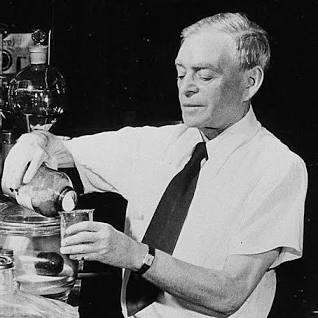
Casimir Funk Biography
Person and Family
Casimir Funk, a prominent biochemist of Polish origin, was born on February 23, 1884, in Warsaw, Poland.
This distinguished scientist was the son of Gustawa Zysan and Jacques Funk, a dermatologist doctor.
Being from a Jewish family, his development was marked by the growing anti-Semitism in Europe during that time.
Brief Overview
Recognized for coining the term "vitamins" in 1912, referring to various essential substances present in food, he was one of the pioneers in this field.
He conducted research in Poland, France, and the United Kingdom before emigrating to the United States in 1915.
He passed away at the age of 83 in Albany, New York, due to cancer.
Education and Studies
Funk studied in various institutions in Eastern Europe, culminating in obtaining his doctorate from the University of Bern, Switzerland.
He joined the Pasteur Institute in Paris, where he studied organic bases and amino acids with the renowned scientist Gabriel Bertrand. In 1906, he took an unpaid position at the University of Berlin, where he worked in the laboratory of the prestigious chemist Emil Fischer.
A year later, he secured a paid position as a biochemist at the Municipal Hospital in Wiesbaden. Subsequently, he was transferred to the pediatric clinic of the University of Berlin, where he continued his work in biochemistry.
This journey through different academic and research institutions in Germany and France allowed him to acquire a solid foundation and experience in the field of biochemistry, laying the groundwork for his future discoveries and scientific contributions.
Scientific Career
In 1910, Casimir Funk joined the Lister Institute of Preventive Medicine in London, England.
During his time at the institute, Funk came across an article by the Dutch physician Christiaan Eijkman, which highlighted that people who consumed whole rice were more resistant to beriberi compared to those who consumed polished rice.
Through experiments with sick pigeons, he discovered that a substance from the amine family, present in the rice bran, prevented the onset of beriberi.
Funk named this substance "vitamins," referring to the Latin terms "vita" (life) and "amines" (chemical compounds containing nitrogen).
Casimir concluded that just a small amount of this substance (1 mg) was sufficient to prevent the disease. In his experiments with rice bran, he also isolated nicotinic acid or niacin, which later served to cure pellagra.
In 1915, he emigrated to the United States and settled in New York, where he conducted fundamental research on cancer, focusing on the study of sugar metabolism in cancer cells.
He also made important advances in the knowledge of pituitary gland hormones and sex glands. He established the importance of the balance between hormones and vitamins, laying the foundations for a better understanding of these biological processes.
Achievements of Casimir Funk
Academic and Scientific Career
- Served at the Lister Institute of Preventive Medicine in London, England
- Worked at the Pasteur Institute in Paris, France
- Collaborated with commercial companies like the U.S. Vitamin & Pharmaceutical Corp.
- Was the head of the Research Department at the H.A. Metz Company
- Professor of Biochemistry at the Faculty of Medicine and Surgery of Columbia University
- Established a laboratory, the Casa Biochemica, in Rueil-Malmaison, France
- Authored the work "Die Vitamine" in 1913
Legacy and Impact
- Recognized by Time magazine as a "pioneer" in medicine, along with Elmer Verner McCollum
- His 1912 publication on vitamins created a new concept for interpreting diet-related events
- Significantly advanced the knowledge of sex hormones
- According to The Independent, his discoveries, especially in nutrition, "have helped the health of many people and led to the cure of several deadly diseases"
Posthumous Awards and Recognition
- Received a Nutrition Hall of Fame award, accepted by a member of his family
- The PIASA (Polish Institute of Arts and Sciences of America) annually awards the "Casimir Funk Natural Sciences Award" in his honor
Casimir Funk was a visionary whose studies and works have left an indelible mark on modern science and medicine. His legacy endures as a reminder of the importance of rigorous research and dedication to improving the health and well-being of humanity.