Barry Sharpless
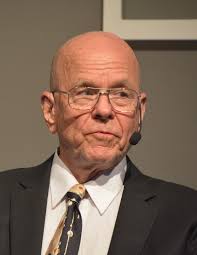
Barry Sharpless Biography
Origins and Education
Barry Sharpless was born on April 28, 1941, in Philadelphia, Pennsylvania. From a young age, he demonstrated an interest in science, particularly in the field of chemistry.
After graduating from high school, Sharpless enrolled at the University of Pennsylvania, where he obtained his bachelor's degree in chemistry in 1963. He then continued his studies at Stanford University, where he received his doctorate in organic chemistry in 1968 under the supervision of the renowned chemist Carl Djerassi.
During his time at Stanford, Sharpless developed a deep interest in research in the field of chemistry.
Academic and Scientific Career
After completing his doctorate, Sharpless joined the faculty of Harvard University, where he became an assistant professor of chemistry in 1968.
During his time at Harvard, Sharpless dedicated himself to research and teaching, focusing on the development of new chemical reactions.
In 1971, Sharpless moved to the University of California, San Diego (UCSD), where he became an associate professor of chemistry.
At UCSD, Sharpless continued his work in organic chemistry, focusing on the development of new reactions and methodologies that would be widely used in the synthesis of chemicals and pharmaceuticals.
Key Scientific Contributions
One of Sharpless's most significant contributions was the development of the asymmetric epoxidation reaction, also known as the "Sharpless reaction."
This reaction, for which he was awarded the Nobel Prize in Chemistry in 2001, allowed chemists to synthesize chiral molecules with a high degree of selectivity and efficiency.
The Sharpless reaction became a milestone in organic synthesis and has been widely used in the pharmaceutical and chemical industries.
Barry Sharpless also contributed to the development of other important chemical reactions and methodologies, such as the asymmetric dihydroxylation reaction and the Sharpless-Katsuki oxidation reaction.
Awards and Recognition
Throughout his career, Sharpless has received numerous awards and recognition for his contributions to chemistry.
In addition to the Nobel Prize in Chemistry in 2001, he has been honored with other prestigious awards, such as the National Medal of Science (1996), the Priestley Prize (1999), and the Wolf Prize in Chemistry (2001).
Sharpless has also been elected as a member of several high-level scientific organizations, such as the National Academy of Sciences of the United States and the Royal Society of Chemistry.
Impact and Legacy
Barry Sharpless's work has had a significant impact on the field of chemistry, particularly in the areas of organic synthesis and pharmaceutical chemistry.
His discoveries have allowed chemists to synthesize more complex and efficient molecules, leading to significant advancements in the creation of new drugs and chemicals.
In addition to his scientific work, Sharpless has also been recognized for his dedication to education and the training of young scientists. He has supervised numerous doctoral and postdoctoral students, and has undoubtedly been a mentor and advocate for the next generations of chemists.