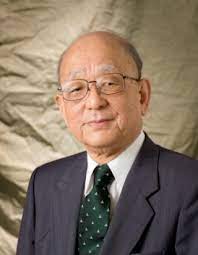
Akira Suzuki
Content Table
Origins and Education
Dr. Akira Suzuki was born on September 12, 1930, in Mukawa, Hokkaido, Japan.
From a young age, Suzuki demonstrated a great interest and aptitude for the sciences, especially in the field of chemistry. After graduating from high school, he entered Hokkaido University, where he obtained his bachelor's degree in chemistry in 1953.
Upon completing his undergraduate studies, Suzuki continued his academic training at Hokkaido University, where he obtained his doctorate in organic chemistry in 1959. During this period, he developed a great passion for research in the field of organometallic compounds, laying the groundwork for his future achievements.
Academic and Scientific Career
After obtaining his doctorate, Dr. Suzuki joined the faculty of Hokkaido University, where he became an assistant professor in 1961. Over the following years, he dedicated himself to teaching and research, publishing numerous scientific articles in prestigious journals.
In 1972, Suzuki was appointed a full professor at Hokkaido University, which allowed him to devote more time to his research. It was during this period that he made one of his greatest discoveries: the cross-coupling reaction between organoboron compounds and organic halides, known today as the "Suzuki Reaction".
This innovative reaction, which allows the formation of carbon-carbon bonds, has become a fundamental tool in organic synthesis and has been widely used in the pharmaceutical and chemical industries. For this discovery, Suzuki received numerous awards and accolades, including the Nobel Prize in Chemistry in 2010.
Contributions and Legacy
Throughout his career, Dr. Suzuki made important contributions to organic chemistry, especially in the field of organometallic compounds. In addition to his work on the Suzuki Reaction, he also contributed to the development of other cross-coupling reactions, such as the Heck Reaction and the Stille Reaction. Suzuki was a prolific researcher, with over 500 publications in high-impact scientific journals.
Beyond his work in the laboratory, he also stood out as an excellent mentor, having supervised numerous doctoral and postdoctoral students throughout his career. In addition to his scientific achievements, Dr. Suzuki was also known for his commitment to the international scientific community. He was a member of several scientific societies and actively participated in the organization of conferences and meetings.
Awards and Recognition
Throughout his career, Dr. Akira Suzuki received numerous awards and recognition for his contributions to organic chemistry. Some of the most notable include:
- Nobel Prize in Chemistry (2010)
- American Chemical Society Award (1997)
- Chemical Society of Japan Award (1980)
- Member of the National Academy of Sciences of the United States (2000)
- Member of the Japan Academy of Sciences (1989)
Retirement and Legacy
After a long and successful career, Dr. Akira Suzuki retired from Hokkaido University in 1994. However, he continued to actively participate in the scientific community, advising young researchers and participating in various research projects.
Suzuki passed away on September 13, 2021, at the age of 90, leaving an impeccable legacy in the field of organic chemistry.