Arthur Kornberg
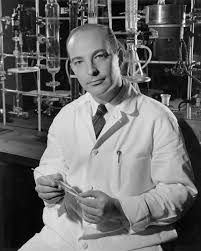
Arthur Kornberg Biography
Origins and Education
Arthur Kornberg was born on March 3, 1918, in Brooklyn, New York. The son of Jewish immigrants, Kornberg grew up in humble circumstances, but with a strong work ethic and a deep interest in science.
From an early age, he demonstrated aptitude for mathematics and the sciences, which led him to enroll at the University of Rochester in 1935, where he graduated with honors in chemistry.
After completing his undergraduate degree, he continued his postgraduate studies at the Washington University in St. Louis, where he obtained his doctorate in biochemistry in 1941. During this period, Arthur developed a keen interest in scientific research, focusing on the study of enzymes and fundamental biochemical processes.
Scientific Career and Achievements
After completing his doctorate, Arthur Kornberg joined the faculty at the Washington University in St. Louis, where he became a renowned researcher and professor.
Over the following decades, he made fundamental contributions to the understanding of biochemical processes, particularly in the field of nucleic acid synthesis. In 1946, Arthur Kornberg and his collaborators achieved a significant milestone by discovering the DNA polymerase enzyme, which plays a vital role in DNA replication.
This discovery laid the foundation for a better understanding of the molecular mechanisms underlying genetic inheritance and the transmission of genetic information. He continued his research on nucleic acid synthesis, focusing on the DNA ligase enzyme, which is essential for DNA repair and maintenance.
His findings in this field contributed significantly to the development of genetic engineering and biotechnology techniques.
Recognition and Awards
Kornberg's scientific achievements were widely recognized by the academic community. In 1959, he was awarded the Nobel Prize in Physiology or Medicine for his work on the biological synthesis of nucleic acids, becoming one of the most distinguished scientists of his generation.
In addition to the Nobel Prize, Kornberg received numerous other awards and accolades throughout his career, including the National Medal of Science, the Lasker Medal, and the Louisa Gross Horwitz Prize. He was elected as a member of the National Academy of Sciences of the United States, among other prestigious organizations.
Contributions to Education and Mentorship
During his long career, Kornberg supervised and guided numerous graduate students and postdoctoral fellows, many of whom went on to become leaders in their respective fields. He served as the Dean of the School of Medicine at the Washington University in St. Louis, where he promoted research and education in the biomedical sciences.
Legacy and Retirement
After a scientific career spanning more than six decades, Kornberg retired in 1983. However, he remained active in research and scientific outreach until the end of his life. Kornberg passed away on October 26, 2007, at the age of 89, leaving an indelible mark as one of the pioneers of modern biochemistry.
Arthur Kornberg's work has been instrumental in the understanding of fundamental biological processes and has laid the groundwork for significant advancements in fields such as genetics, biotechnology, and medicine. His dedication to scientific research and his commitment to education and the training of new talents have made him a prominent figure in the history of American science.